top of page
The true glory of Los Molinos is the surrounding countryside. It's mostly used as grazing land for cattle, in a traditional managed landscape known as dehesa, combining grass and trees, mainly ash trees, holm oaks and Pyrenean oaks. Cattle roam free, sometimes in fenced-in plots, sometimes not. You occasionally see the farmers rounding up a stray cow on their horses. Delightful lanes and paths criss-cross this land in all directions often between dry stone walls, in some cases following the official medieval routes of the migrating herds of merino sheep of La Mesta.
 |  |  |
|---|---|---|
 |  |  |
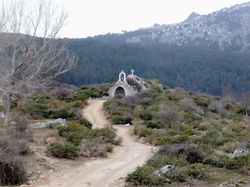 This ancient-looking shrine was actually built by holiday-makers in the 1960s. |  |  |
 |  |  |
 |  |  |
 |  |  |
 |  Ash trees are severely pruned at the end of the summer, when grass becomes scarce, to feed cattle with the leaves. |  |
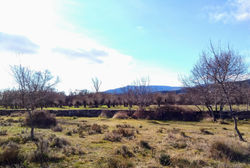 |  |  The cambroño (adenocarpus hispanicus) is a bush endemic to this area. In the spring its flowers cover the hillsides in yellow. |
 |  |  Massive granite boulders, known as berruecos, are ubiquitous in this area. |
 |  |
bottom of page